A week in psychiatry with Ida Liebe Felsted

Updated: Jun 9
In each issue, we ask one of our colleagues to describe a typical week at work. Although we are all psychiatrists, our daily routines and working conditions vary greatly. It is therefore both interesting and inspiring to gain insight into the everyday lives of our colleagues. This time, Ida Liebe Felsted, an educational psychiatrist, kindly agreed to share her working week.
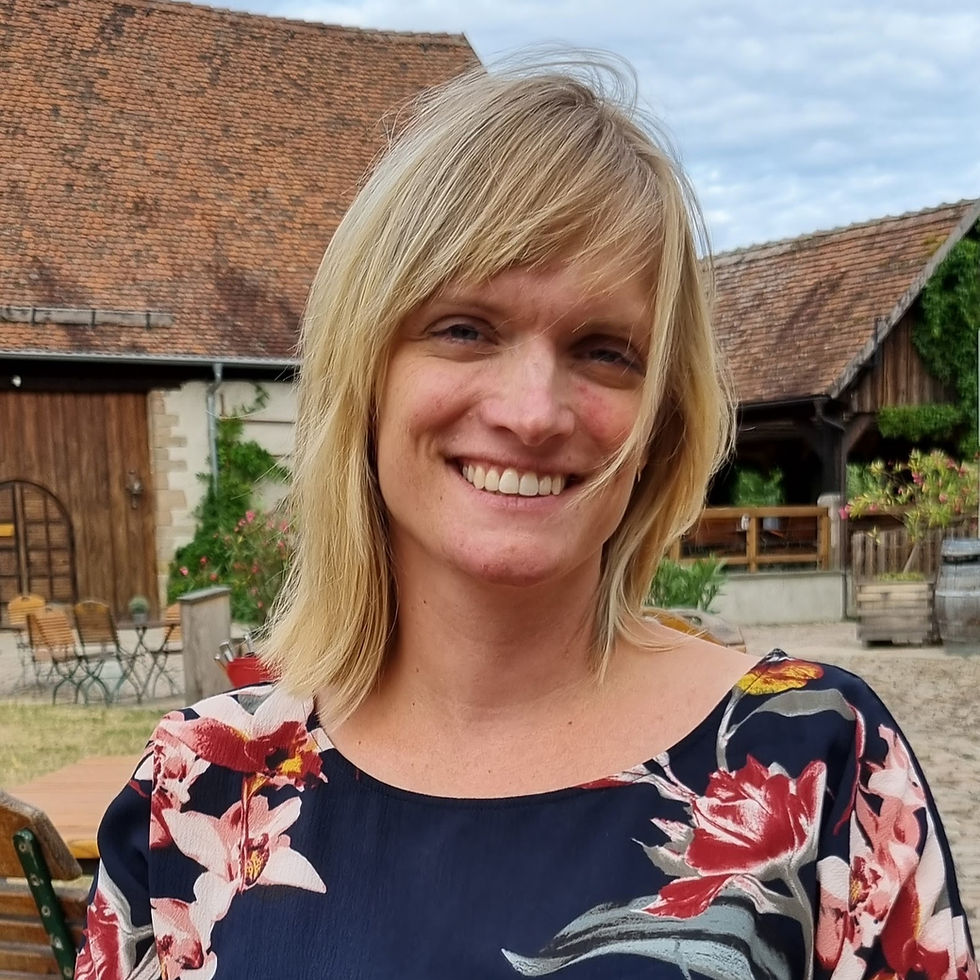
Ida Liebe Felsted
MD, MHPE, Program Director for Medical Education across Mental Health Services in the Capital Region of Denmark. She completed her specialist training in psychiatry in 2018 and earned a Master’s in Health Professions Education from Maastricht University in 2024. Clinically, she has worked across both inpatient and outpatient settings, primarily with patients with psychosis and dual diagnoses. Since the spring of 2025, she has been working as Program Director with a focus on advancing educational quality and innovation in psychiatric training. At the same time, she became the Danish representative in UEMS Psychiatry, working to align psychiatric training across Europe. In the autumn of 2025, she was also elected Chair of the Educational Board under the Danish Psychiatric Association.
Monday
The week began, as many do, with a meeting—this time the monthly gathering of the Danish Network for Psychiatric Education. With our general assembly approaching, the focus was on making sure all formalities were in order. Having now completed our first year as an association, we are slowly but surely finding our footing. There is still much to be done in terms of visibility, but the foundations are in place. As chair, I have been drafting our annual report, with thoughtful input from the rest of the board helping to shape it along the way.
Alongside this, my colleague Sara and I have been preparing an educational workshop for educators introducing one way to teach ethics in everyday clinical practice. Our ambition is to reach beyond psychiatric education and inspire colleagues from other specialties to engage more actively and structured towards ethical reflection in the postgraduate program. The format combines a short theoretical introduction with case-based discussions and analysis, where participants are invited to grapple with the complexities of real-life ethical dilemmas. We are both curious about how it will be received and if they find it transferable into their own local settings and specialties.
Next week, I will have the opportunity to deliver the workshop myself at one of our psychiatric departments, where a group of first-year residents have been assembled. As my daily work rarely brings me into direct contact with trainees, I particularly value these moments of face-to-face teaching in the clinical setting.
My working days tend to unfold as a balance between meetings across various educational forums and more practical tasks, such as developing tools to support local consultants responsible for training. Recently, I have been compiling an overview of continuing professional development opportunities for specialists in both adult and child and adolescent psychiatry. It still requires some polishing—links to be added, courses to be updated—but the aim is clear: to highlight opportunities that extend beyond purely medical expertise and also support the development of roles as educators, leaders, and collaborators.
Tuesday
Tuesday ended on a different note, with a short run alongside my son. We are, somewhat ambitiously, training for a recreational race in May. Having neglected running for years, I am in definite need of both motivation and a capable training partner—fortunately, he provides both. This week, we even managed three runs. The real challenge, of course, lies in maintaining that momentum.
Wednesday
Wednesday brought me back into meeting rooms, this time as part of a committee focused on recruitment and retention within child and adolescent psychiatry. Denmark has long faced a shortage of psychiatrists, a challenge now compounded by increasing patient numbers and a steady movement of clinicians from hospital settings into private practice. The discussions were constructive, centering on how to strengthen professional environments and ensure opportunities for supervision and ongoing development. The next step is to translate these ideas into concrete recommendations for leadership—ideally leading to tangible changes that clinicians can begin to feel in the not-too-distant future.
Later that day, my attention turned to postgraduate medical education at my new hospital. Psychiatry is no longer a standalone institution but has become integrated into the local acute hospitals. While I continue to coordinate psychiatric education across the capital region, my base is now at Bispebjerg-Frederiksberg Hospital. It has been a welcome change, not least because I now share an office environment with a colleague equally dedicated to medical education. Discussions across our desks are frequent and often lively. On this particular day, we also welcomed a new trainee in public health medicine, who will be joining our broader educational team.
Thursday
Thursday was quieter, at least in principle, and largely dedicated to research and transcription. In practice, however, this meant wrestling with the limitations of transcription software—particularly when confronted with my Swedish colleague’s Danish. The results were, at best, creative interpretations, and at worst complete nonsense, leaving me to rely on manual transcription. The work forms part of an evaluation of the reintroduction of psychiatry into the first postgraduate year. After several years’ absence, newly graduated doctors are once again spending six months in psychiatric training posts. Through interviews with both trainees and their supervisors, we are now assessing whether they are gaining the intended competencies and whether we are supporting them adequately in their transition into clinical practice.
The day ended on a more uplifting note, with a guided tour of my new workplace. Bispebjerg Hospital, built in 1913, remains a striking example of how architecture once sought to promote healing through light, air, and thoughtfully designed surroundings. The historic buildings and carefully maintained gardens—rich in both flora and fauna—offer a welcome contrast to the pace of modern hospital life.
Friday
On Friday morning, I worked from home, sparing myself the familiar challenge of navigating Copenhagen’s increasingly congested traffic. After catching up on emails and administrative tasks, I headed to Psychiatric Center Sankt Hans, another of the capital’s historic institutions. The Center houses the region’s forensic psychiatry services as well as inpatient units for dual-diagnosis treatment. With an upcoming inspection from the Danish Health Authority, there was a sense of focused preparation. Before the meeting, I had the opportunity to brief our new medical deputy director—whose background is in geriatrics—on the particularities of psychiatric education. The meeting itself was reassuring: the department demonstrated both insight into its strengths and a clear awareness of areas for improvement. With that level of preparation, the inspection should hold few surprises—apart, hopefully, from new ideas to take forward.
The week drew to a close in a more familiar and comforting rhythm, with family time: pizza, sushi, and cartoons. The weekend was spent settling into our new home—and attending a long-awaited christening with friends we have not seen in far too long. □


