On psychiatry and military stigma
Updated: Jun 9
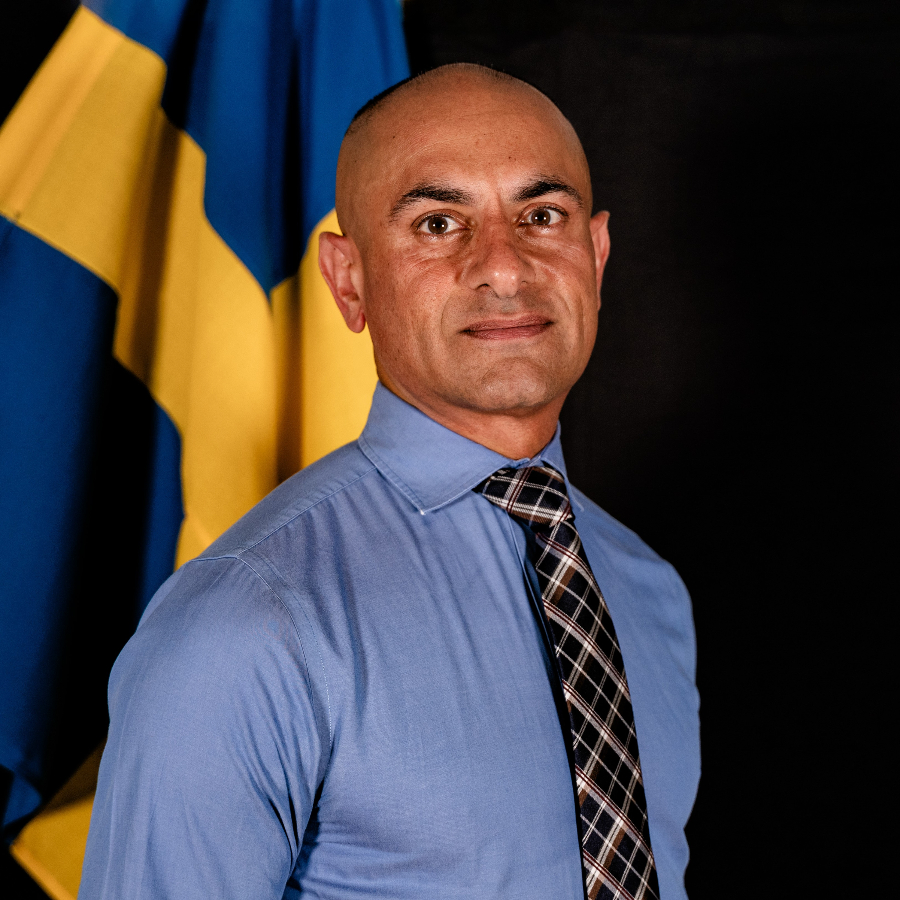
As a chief military psychiatrist, involved in the psychiatric strategic oversight of armed forces personnel, covering selection (before war), performance (during war) and rehabilitation (after war); I often reflect upon the essential contribution of my civilian colleagues. Yes, there is always a final end of war and a fractured society may require years to heal and recover both the visible and invisible wounds afflicting soldiers, their families and society at large.
Cave Sinai
Chief Military Psychiatrist, Swedish Armed Forces, Sweden.

How can they be prepared for the markedly different war-time standard of being ”enough mentally fit to operate within the military organization”? Or encountering the wounded soldier, not being fully recovered according to conventional psychiatric standards, but still expected to return to operational duty?
How can we raise their awareness of the fact that military somatic symptoms, may very well disguise mental origins? How can clinicians better differentiate between symptoms arising from repeated mild traumatic brain injuries, and symptoms of a primarily psychiatric nature, particularly in an era where modern warfare increasingly involves high-energy blast exposures?
How can my colleagues speak the language of the soldier, reducing the stigma-barrier prevailing in the military culture? How can my colleagues create the atmosphere, where exposing mental weakness is accepted, encountering soldiers already fostered in a hypermasculine warrior culture? How can we distinguish trauma-related symptoms from the anxious thoughts rooted in moral concerns and ethical conflicts?
The questions are many, but I have great faith in my civilian brothers and sisters in the psychiatric wards, guided by the Hippocratic Oath to treat all equally, even the enemy’s soldiers with the same care as our own. I have unflagging faith that modern psychiatrists are aware of the Geneve Convention, guiding them to treat all soldiers with non-discriminatory care. I have great faith of my colleague’s ability to be respected guardians of the moral compass, even if they word by word are not aware of the World Medical Association Policy Tag on Loyalty, ”A conflict of interest arises when professional judgement concerning direct patient care might be unduly influenced by secondary interests”. The secondary interest of perhaps a hateful society suffering from war-trauma.

My admiration still stands for the doctors in the Al-Quds hospital in Aleppo (destroyed in 2016), well known for adhering to ethical principles, treating any wounded person, treating based on medical needs alone. I have great faith that every one of all Nordic psychiatrists will be guided by the same principles. I also put great trust in my colleagues peactime efforts in ensuring continuity and operativeness during a possible wartime or crisis, also taking account of the health of the mental health personnel.
What, then, can we do today? Reducing stigma requires long-term commitment and as always it starts with ourselves. Are we, as doctors willing to reach out for our own mental support when needed? I have recently become concerned by evidence suggesting elevated suicide risk among psychiatric professionals. How can we stimulate acts of our own responsibility for our mental health?
I have strong confidence that every one of us, as mental health professionals, and role-models, today after reading this very text, can define at least three concrete acts of self-care during an extended workload in a crisis. I have defined my three principles (being open with my personal status with my love and family, prioritizing sleep and regularity in asking my nearest colleagues for feed-back on my conduct and health status).
What are yours? □


