Stigmatization of Greenlanders
Updated: Jun 9
Greenlanders drink less than Danes, but the prejudices portraying Greenlanders as suffering widespread alcohol problems. The recent debate in the Danish media has once again brought the obvious discrimination against and prejudices about Greenlanders to the surface. Derogatory expressions such as "Greenlander drunk stiff," "Greenlandic rolls," "The Greenlandic embassy," and "Greenlandic pubs" appear in the Danish language and simultaneously reveal persistent prejudices about Greenlanders' alcohol consumption. It is a widespread prejudice that Greenlanders drink and that Greenlandic society is soaked with drunkenness and social deprivation. Such stereotyping reinforces perceived differences, evokes negative emotions and contempt, and is the base of the stigma process (1). The stereotyping leads to the patients being treated with less respect that, in turn, may correlate to less time spent with the patient and less information provided to the patient by for example health care staff (2). The prejudices and the stigmatization against Greenlanders are well-documented: A YouGov survey from 2012 showed that 40% of the more than 1,000 Danes that were asked, associated Greenlanders with abuse, social problems, and alcohol. Half of the participants were sure that Greenlanders drank more than Danes.

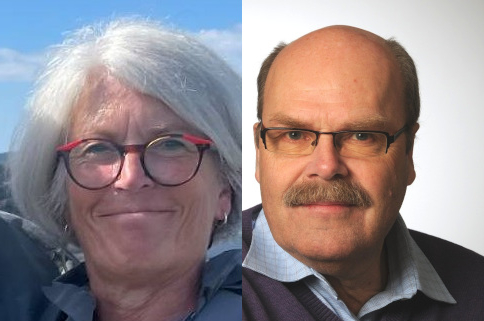
Anette Søgaard Nielsen
Professor with Special Responsibilities at the Unit for Clinical Alcohol Research, Research Unit of Psychiatry (Odense), Department of Clinical Research, University of Southern Denmark and the Region of Southern Denmark. She holds the degrees, Cand.phil. and PhD, and her main research interests include alcohol treatment, stigma, and narrative medicine.
Ulrik Becker
Professor Emeritus at the National Institute of Public Health, University of Southern Denmark. He holds a DMSc degree and is a specialist in hepatology, gastroenterology, and internal medicine. For decades, his work has focused particularly on epidemiological research into the consequences of alcohol use and alcohol dependence, as well as on research in Greenland.

Prejudices often lead to stigmatization. The Danish Institute for Human Rights published in 2015 the study 'Equal Treatment of Greenlanders in Denmark' (3) and described how nearly half of Greenlanders living in Denmark experience stigmatization and a prejudiced attitude from ethnic Danes. Numerous examples illustrate how Greenlanders encounter discrimination, stigmatization, offensive language, inappropriate jokes, and poor service when interacting with schools or other educational institution. A recent study from the Danish Institute for Human Rights confirms that Greenlandic students in Denmark continue to face prejudice, are poorly treated by fellow students and teachers, and are subjected to derogatory comments because of their Greenlandic background (4). The overwhelming prejudice is the Danes' perception of Greenlanders' use of alcohol.
Facts about alcohol in Greenland
Are the prejudices against Greenlandic alcohol use true? No, they are not. It is true that there previously was a very high alcohol consumption per capita in Greenland, also much higher than in Denmark. Alcohol has been present in Greenland dating back to the 15th-1600s, but up to the 1950s alcohol was only occasionally traded with whalers. Alcohol only became widely accessible in Greenland after the constitutional amendment in 1953, when Greenland became an equal part of the Kingdom of Denmark and the Landsråd lifted earlier restrictions on alcohol sales. This led to a significant increase in consumption rising from 7 liters of pure alcohol on average per capita in Greenland in 1960 and peaked in 1987 with an average of 22.2 liters of pure alcohol for all adults. Since then, alcohol consumption has steadily declined in Greenland, and since the mid-1990s the average alcohol consumption has been either the same or (for the past 10 years) significantly lower than in Denmark. In 2023, the average alcohol consumption per adult resident was 8.5 liters of pure alcohol in Greenland and 9.3 liters in Denmark.
This lower alcohol intake is also reflected in the respective population health surveys, where health behavior in the Greenlandic population are examined at regular intervals. The recommended maximum alcohol intake in Greenland are 7 units per week for women and 14 for men, corresponding to the recommended low-risk limit we had in Denmark in 2022, before they were revised to 10 units per week for both women and men. The population survey in Greenland from 2018 (5) showed that 8.8% of those surveyed exceeded the recommended alcohol limits, while the corresponding figure in Denmark at that time was 17.6%, as shown in the National Health Profile 2017 (6). There were gender and age differences between populations: In Greenland, the highest proportion of women exceeding the recommended alcohol limits was in the 15-24 age group (19%). For men, the proportion was also highest in the 15-24 age group (9.0%). In Denmark, the corresponding figures were as high as 30.9% for women and 30.9% for men in 2017. The overall picture is unambiguous: people in Greenland drink less than people in Denmark.

Prevention and treatment
In Greenland, much more targeted work has been done, and there has been a far greater willingness to work on prevention (7). Tools such as the availability and price of alcohol have been used, making use of well-established and effective forms of structural prevention. Substance abuse treatment in Greenland is coordinated and managed by Allorfik, which operates under challenging geographical conditions, and yet successfully established five treatment centers in the largest Greenlandic towns. The Allorfik centers provide more than two thirds of the population with direct access to treatment (8). Residents in towns without an Allorfik center are treated locally through visiting therapists from Katsorsaavik Nuuk, with whom the Self-Government has an agreement. Residents from settlements are most often treated in Nuuk. At the same time, all residents have access to treatment via phone or internet. The new treatment system has been a clear success story, with more than a doubling of the number of patients treated (9). In many ways, it is a much better offer than in Denmark, where there is no uniformity in the treatment. In addition, Allorfik systematically evaluates the treatment using solid data and through research projects. Here too, Greenland is ahead of Denmark.
Socially vulnerable
There are approximately 17,000 Greenlanders living in Denmark, and most are well integrated into Danish society. A smaller number, estimated at 1,000-1,500, are classified as socially vulnerable (10). One third of those who consider relocation from Greenland to Denmark do so to have somewhere to live. Thirty percent wish to escape a conflict or a problem, and 22% wish for a fresh start (11). Another reason may be that both alcohol and hash are considerable cheaper in Denmark. The study "Health Profile for Socially Disadvantaged Greenlanders in Denmark" from 2019 shows that 40% of socially disadvantaged Greenlanders have an alcohol abuse problem, whereas the corresponding proportion among other socially disadvantaged people is 13% (10). The proportion who are homeless is almost twice as high among socially disadvantaged Greenlanders in Denmark (50%) compared to 24% among other socially disadvantaged people. 19% of socially disadvantaged Greenlanders often do not get enough food, so poverty is also a significant problem. On the other hand, socially disadvantaged Greenlanders in Denmark more often report having a social network and regularly seeing friends and acquaintances, although fewer maintain close contact to their family.
Many of the prevailing prejudices about Greenlanders rest on outdated and incorrect data. The vast majority of Greenlanders are fully functioning. Are there alcohol problems in Greenland and among Greenlanders? Yes, there are. But there are also more than 60,000 Danes who have a serious alcohol problem (12) Thus, portraying Greenlanders as a uniquely “drunken” population is neither justified nor reasonable from any standpoint.
Changing stigmatization and prejudices is difficult and requires long-term effort. It is about strengthening knowledge of each other, about education, equality at educational institutions, language assistance, facilitation of work opportunities, and much more. We have a responsibility to confront and eliminate discrimination and prejudices directed at Greenlanders. We must appreciate the diversity in our realm and cultivate willingness to learn from each other. When it comes to alcohol policy, prevention, and the development of treatment, we Danes can learn a lot from the Greenlanders. Stigma does not only affect those who are living with stigmatized health conditions.
Preventing stigmatization of Greenlanders is important. As stressed by Nyblade and colleagues, stigmatization extend outward through communities and inwards through for example the healthcare facility into the policies and procedures that guide care, and on to the staff who are charged with providing care (13). Reducing stigma has the potential to improve the workplace environment in healthcare settings, the quality of care provided by staff (14), and strengthen clinical outcomes of individuals living with stigma (15), including Greenlanders. □
References
Institut for Menneskerettigheder. Flertallet af grønlandske studerende i Danmark oplever fordomme og eksklusion København: Institut for Menneskerettigheder; 2023 [Available from: https://menneskeret.dk/nyheder/flertallet-groenlandske-studerende-danmark-oplever-fordomme-eksklusion.
Larsen CVL, Hansen CB, Ingemann C, Jørgensen ME, Olesen I, Sørensen IK, et al. Befolkningsundersøgelsen i Grønland 2018. Levevilkår, livsstil og helbred København: Sattens Institut for Folkesundhed, SDU; 2019.
Jensen HAR, Davidsen M, Ekholm O, Christensen AI. Danskernes Sundhed – Den Nationale Sundhedsprofil 2017. København: Statens Institut for Folkesundhed, SDU; 2018.
Flyger Holflod J, Lytken Larsen CV, Niclasen B, Sogaard Nielsen A. Wishing for a more sober society: A scoping review on addiction problems and treatment in Greenland preceding the 2016 national treatment strategy. Nordisk Alkohol Nark. 2025;42(2):113–33.
Niclasen B. Allorfik, Årsrapport 2023. Nuuk: Allorfik, Videncenter om Afhængighed; 2024.
Flyger J, Nielsen B, Niclasen BV, Nielsen AS. Does establishing local treatment institutions lead to different populations seeking treatment among Greenlandic Inuit? Nord J Psychiatry. 2020;74(4):259–64.
Ahlmark N, Davidsen M, Larsen CVL, Pedersen PV. Sundhedsprofil for socialt udsatte grønlændere i Danmark København: Statens Institut for Folkesundhed, SDU; 2019.
Schiermacher M. Fra Grønland til gaden. København: Kofoeds Skole; 2020.
Hjarnaa L, Tolstrup JS, Becker U, Ekholm O. Antal danskere med et alkoholproblem – En analyse baseret på alkoholscreeningsværktøjet CAGE-C. København: Statens Institut for Folkesundhed, SDU; 2023.
Nyblade L, Stockton MA, Giger K, Bond V, Ekstrand ML, Lean RM, et al. Stigma in health facilities: why it matters and how we can change it. BMC Med. 2019;17(1):25.
Morris J, Schomerus G. Why stigma matters in addressing alcohol harm. Drug Alcohol Rev. 2023;42(5):1264–8.
Puhl RM, Heuer CA. Obesity stigma: important considerations for public health. Am J Public Health. 2010;100(6):1019–28.


