Do antipsychotic drugs work?

More than 400 randomized controlled clinical trials (RCTs) of antipsychotic efficacy have been conducted, finding generally moderate effect sizes of antipsychotic drugs compared to placebo (1). For comparison, RCTs of various general medicine drugs, used on their respective indications, demonstrate similar effect sizes (2). Nevertheless, claims about limited efficacy of antipsychotics have been put forward. Pertinent questions remain: are the effect sizes clinically meaningful and generalizable to the broader population of people with schizophrenia?
RCTs of efficacy
RCTs are essential for establishing superiority over placebo and/ or non-inferiority and/ or more beneficial side effects profiles compared to established antipsychotic drugs, being the superior design to eliminate confounding variables that may otherwise bias the treatment effect estimates (3). However, several shortcomings have been pointed to that may compromise ecological validity of the efficacy trial results. As exemplified in one of the most comprehensive recent systematic reviews and meta-analysis of antipsychotic drug efficacy (1), generally RCTs of efficacy are of short-term duration (mean duration 7 weeks), with participants suffering from multiple episodes of psychosis (mean duration of disease 12 years, mean age of participants 37 years). Studies in first episode patients are rarer but indicate substantially higher antipsychotic response rates, with 52% having at least 50% symptom reduction and 81% with at least 20% symptom reduction (4). No placebo-controlled studies were identified, however. Moreover, narrow inclusion and broad exclusion criteria of RCTs of efficacy exclude the vast majority of otherwise eligible patients from participation, as pointed out by Leucht and collaborators (5). Finally, almost half the studies are sponsored by pharmaceutical industry (1), which introduce risk of funding bias in favour of the sponsor (6).
RCTs of effectiveness
The case for effectiveness studies to supplement studies of efficacy was advocated following the turn of the millennium. Although without a clear-cut definition, effectiveness studies are characterized by samples and experimental environments that seek to mimic daily clinical practice including long follow-up (7). Effectiveness studies are also frequently labelled “naturalistic”, “real-life”, “pragmatic”, or “practical” and aim to investigate how, in our case, antipsychotic drugs work under clinically representative circumstances as opposed to the highly selective and rigid designs of efficacy trials (8, 9). The effectiveness design often include, in addition to standard psychometric tools, also global outcome measures such as quality of life, treatment costs, and time until treatment discontinuation (10). Time until discontinuation is considered a reflection of the trade-off between beneficial- and side effects, as judged by both patient and treating psychiatrist. In our 2009 systematic review of randomized effectiveness trials main findings were that the side effect differences between antipsychotic drugs as reported in RCTs of efficacy were generally less clear cut in effectiveness studies, and that olanzapine was associated with longer time until treatment discontinuations and better treatment adherence in chronic phase schizophrenia compared to some of the other antipsychotic drugs despite more metabolic side effects (10). We have more recently compared the three atypical antipsychotics amisulpride, aripiprazole and olanzapine head-to-head in an effectiveness RCT with one-year follow-up (BeSt InTro) (11). Participants had schizophrenia-spectrum disorders, and with symptoms of active psychosis at baseline. The study was publicly funded in its entirety and the funder had no role in study design, data collection, data analysis, data interpretation, or writing of the report. We found that, for the primary outcome change of the Positive and Negative Syndrome Scale (PANSS) total score after 52 weeks, amisulpride was significantly superior to the other antipsychotics, with effect sizes for differences (Cohen’s d) of 0.5-0.6. As found in the previous systematic review, side effect differences between the comparators were generally statistically non-significant. About 40% of participants were antipsychotic drug naïve, meaning no previous exposure to antipsychotics before study participation, which may be considered a proxy for first episode psychosis. In analyses of the drug naïve sub sample, the PANSS total estimates after 52 weeks were like those in the total sample. Several secondary outcomes have been reported in subsequent publications from BeSt InTro. Most of the sample (74%) had a PANSS total reduction of 59% after 12 months (Good response group) (12). Thirteen percent of the sample had 82% PANSS total reduction after 12 months (Strong response group), whereas the last 13% of the sample were poor responders with 14% PANSS Total reduction after 12 months (Slight response group). Finally, research on if and how the antipsychotic effectiveness is influenced by concurrent use of illicit substances or childhood trauma is scarce. We found neither factor to affect the overall effectiveness of the antipsychotics under investigation (13, 14).

Cohort studies
Even in RCTs of effectiveness potential selection bias remains an issue despite samples more representative of clinical practice. The most severely ill do not qualify for RCT trial participation because of incapability to collaborate with study procedures and give informed consent. In the BeSt InTro study only 40% of potential participants assessed for eligibility qualified for inclusion, and there was substantial attrition during follow-up although missingness was deemed to be at random (11). Nationwide and other major cohort studies are important in providing representative samples with sufficient statistical power to research hard outcomes such as death, although possible confounding bias always needs careful consideration in this study design (15). Several studies find substantially reduced overall and cardiovascular mortality risks associated with use of antipsychotic drugs compared to non-use as reported in recent systematic reviews (16, 17). In a Norwegian total cohort study including all patients admitted to the psychiatric emergency unit and followed for up to 10 years, periods with non-use of antipsychotic drugs were associated with more than doubled overall mortality risk compared to in periods with antipsychotic drug use (18). The most prevalent cause of mortality was cardiovascular disease. This apparent paradox, given the metabolic side effect profiles of antipsychotic drugs, may at least partly be explained by that antipsychotic drug use is associated with lower risk of treatment discontinuation of several medications to reduce cardiometabolic risk, including statins, beta-blockers, antidiabetic- and antihypertensive drugs (19). Further, Solmi and collaborators (20) found that use of any antipsychotic drug compared to non-use in the same patients was associated with a 30%-50% reduced risk of work disability in non-affective psychosis.
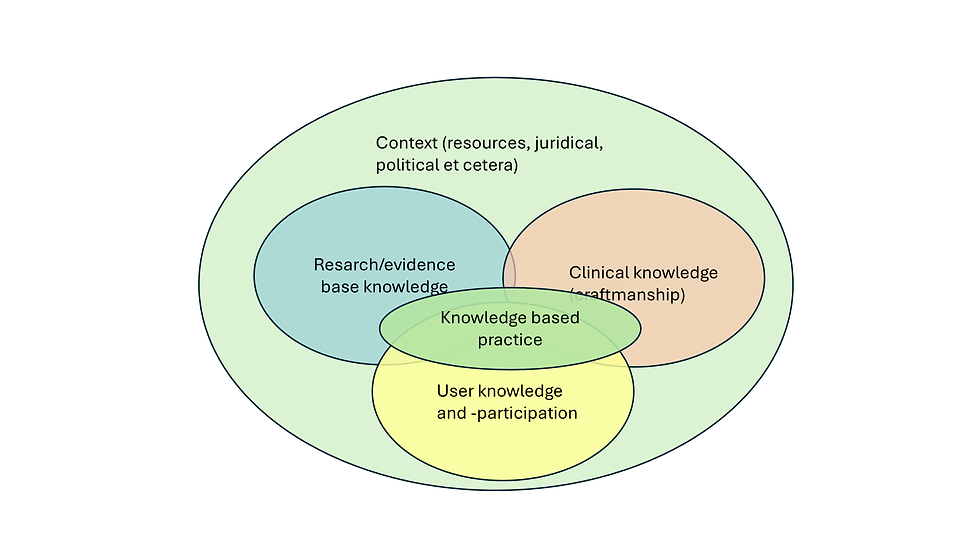
In summary, each study design has its benefits and limitations. In our opinion this calls for integration of results from studies with complementary methods and designs to capture the overall clinical usefulness of antipsychotic drugs. Based on our research, reading and years of practice of clinical work we find that careful and relation-based antipsychotic treatment is of high value to most users, efforts to minimize side-effects are very important, and that the shortcomings of the current antipsychotic treatment make development of novel treatments an imperative. □
References
Huhn M, Nikolakopoulou A, Schneider-Thoma J, Krause M, Samara M, Peter N, et al. Comparative efficacy and tolerability of 32 oral antipsychotics for the acute treatment of adults with multi-episode schizophrenia: a systematic review and network meta-analysis. Lancet. 2019;394(10202):939–51.
Leucht S, Hierl S, Kissling W, Dold M, Davis JM. Putting the efficacy of psychiatric and general medicine medication into perspective: review of meta-analyses. Br J Psychiatry. 2012;200:97–106.
Hariton E, Locascio JJ. Randomised controlled trials - the gold standard for effectiveness research: Study design: randomised controlled trials. BJOG. 2018;125(13):1716.
Zhu Y, Li C, Huhn M, Rothe P, Krause M, Bighelli I, et al. How well do patients with a first episode of schizophrenia respond to antipsychotics: A systematic review and meta-analysis. European neuropsychopharmacology : the journal of the European College of Neuropsychopharmacology. 2017.
Leucht S, Heres S, Hamann J, Kane JM. Methodological issues in current antipsychotic drug trials. Schizophr Bull. 2008;34(2):275–85.
Heres S, Davis J, Maino K, Jetzinger E, Kissling W, Leucht S. Why olanzapine beats risperidone, risperidone beats quetiapine, and quetiapine beats olanzapine: an exploratory analysis of head-to-head comparison studies of second-generation antipsychotics. Am J Psychiatry. 2006;163(2):185–94.
Jaffe AB, Levine J. Efficacy and effectiveness of first- and second-generation antipsychotics in schizophrenia. J Clin Psychiatry. 2003;64 Suppl 17:3–6.
March JS, Silva SG, Compton S, Shapiro M, Califf R, Krishnan R. The case for practical clinical trials in psychiatry. Am J Psychiatry. 2005;162(5):836–46.
Nasrallah HA, Targum SD, Tandon R, McCombs JS, Ross R. Defining and measuring clinical effectiveness in the treatment of schizophrenia. Psychiatric services. 2005;56(3):273–82.
Johnsen E, Jorgensen HA. Effectiveness of second generation antipsychotics: a systematic review of randomized trials. BMC Psychiatry. 2008;8:31.
Johnsen E, Kroken RA, Loberg EM, Rettenbacher M, Joa I, Larsen TK, et al. Amisulpride, aripiprazole, and olanzapine in patients with schizophrenia-spectrum disorders (BeSt InTro): a pragmatic, rater-blind, semi-randomised trial. The lancet Psychiatry. 2020;7(11):945–54.
Drosos P, Johnsen E, Bartz-Johannessen CA, Larsen TK, Reitan SK, Rettenbacher M, et al. Trajectories of response in schizophrenia-spectrum disorders: A one-year prospective cohort study of antipsychotic effectiveness. World J Psychiatry. 2022;12(3):521–32.
Alisauskiene R, Johnsen E, Gjestad R, Kroken RA, Kjelby E, Sinkeviciute I, et al. Does drug use affect the efficacy of amisulpride, aripiprazole and olanzapine in patients with schizophrenia spectrum disorders? Results from a pragmatic, randomised study. Gen Hosp Psychiatry. 2023;83:185–93.
Morkved N, Johnsen E, Kroken RA, Winje D, Larsen TK, Thimm JC, et al. Impact of childhood trauma on antipsychotic effectiveness in schizophrenia spectrum disorders: A prospective, pragmatic, semi-randomized trial. Schizophr Res. 2022;246:49–59.
Miroshnychenko A, Zeraatkar D, Phillips MR, Bakri SJ, Thabane L, Bhandari M, et al. Cohort studies investigating the effects of exposures: key principles that impact the credibility of the results. Eye (Lond). 2022;36(5):905–6.
Vermeulen J, van Rooijen G, Doedens P, Numminen E, van Tricht M, de Haan L. Antipsychotic medication and long-term mortality risk in patients with schizophrenia; a systematic review and meta-analysis. Psychol Med. 2017;47(13):2217–28.
Correll CU, Solmi M, Croatto G, Schneider LK, Rohani-Montez SC, Fairley L, et al. Mortality in people with schizophrenia: a systematic review and meta-analysis of relative risk and aggravating or attenuating factors. World Psychiatry. 2022;21(2):248–71.
Stromme MF, Mellesdal LS, Bartz-Johannesen C, Kroken RA, Krogenes M, Mehlum L, et al. Mortality and non-use of antipsychotic drugs after acute admission in schizophrenia: A prospective total-cohort study. Schizophr Res. 2021;235:29–35.
Solmi M, Tiihonen J, Lahteenvuo M, Tanskanen A, Correll CU, Taipale H. Antipsychotics Use Is Associated With Greater Adherence to Cardiometabolic Medications in Patients With Schizophrenia: Results From a Nationwide, Within-subject Design Study. Schizophr Bull. 2022;48(1):166–75.
Solmi M, Taipale H, Holm M, Tanskanen A, Mittendorfer-Rutz E, Correll CU, et al. Effectiveness of Antipsychotic Use for Reducing Risk of Work Disability: Results From a Within-Subject Analysis of a Swedish National Cohort of 21,551 Patients With First-Episode Nonaffective Psychosis. Am J Psychiatry. 2022;179(12):938–46.