From repetition to reflection: reviewing schizophrenia treatment practices with Professor Vesta Steiblienė

Throughout the history of psychiatry, the treatment of psychosis has undergone a series of transformations, with new concepts of this mental disorder and new treatment methods emerging. It seems that science is learning more every day about the effectiveness and safety of various treatment methods, but are treatment choices always determined by scientific evidence? Today, I am talking to Professor Vesta Steiblienė about the polarisation associated with the treatment of psychosis, as well as which methods of treating psychosis are still overused despite not being based on scientific evidence, and which, despite having strong evidence, are underused.
Goda Tikniūtė: Where, in your opinion, are the polarizing tensions between doctors, patients and their relatives, or within the psychiatric community itself, most noticeable in the treatment of psychosis?
Vesta Steiblienė: When we speak about polarization in the treatment of psychosis, I think it is essential to begin not with individual roles but with the system itself. In Lithuania, as in many other countries, we see a clear mismatch between the availability of services and the expectations of people who live with schizophrenia and their family members. Access to family interventions, psychotherapeutic support, and timely services from psychiatrists, psychologists, and other therapists is still insufficient. The need is greater than the system’s capacity to provide. This structural discrepancy inevitably creates tension - not only frustration from service users but also pressure on professionals who cannot offer what evidence-based guidelines recommend.
Polarization is also evident in the relationship between patients and their close environment. Some patients express a clear wish to be treated without medication, while family members - who live with the practical consequences of the illness - often prioritise symptom control, safety, and stability in daily life. These divergent expectations naturally create friction. And although the patient’s autonomy, wishes, and values are central to our work, we also have a responsibility to support their relatives, who are often deeply involved in care and bear a significant emotional and practical burden.
Finally, there are differences within the psychiatric community itself. Part of this is generational - related to training, experience, and the traditions that shaped us. I represent an older generation of psychiatrists who completed their studies in Lithuania shortly after the restoration of independence, at a time when the “old school” of psychiatry still had a strong influence. Treatment was almost exclusively pharmacological, and attitudes towards both prescribing and patients were shaped accordingly. This generation is gradually phasing out, and psychiatry is evolving rapidly, but differences between various schools, experiences, therapeutic philosophies, choices of medication, and dosing strategies remain visible.
In short, polarization appears at all levels - the system, patients and families, and the professional community - each for its own reasons, and each requiring thoughtful dialogue and structural improvements.
To what extent is the choice of treatment determined by the attitudes of the psychiatrist or the patient, in your opinion?
The choice of treatment in psychosis is still strongly influenced by the attitudes, habits, and clinical culture of individual psychiatrists, as well as the expectations of patients themselves. Today we have access to long-acting injectable antipsychotics and modern atypical agents, yet practice varies widely. Some clinicians prioritise these evidence-based options early and actively offer patients the most advanced alternatives, especially when cooperation or adherence is uncertain. Others continue to rely mainly on traditional oral medications, even when it is clear that adherence is problematic.
A similar pattern is seen with clozapine. Some psychiatrists closely monitor the clinical picture, recognise treatment resistance in time, and move promptly to clozapine as recommended by international guidelines. Others tend to delay this decision, often out of caution or habit, and such postponement may limit the patient’s opportunity to benefit from the most effective therapy for resistant illness.
There are also differences in the use of combined polypharmacy, the threshold for adding additional medications, and the willingness to offer or encourage neuromodulation methods. These decisions often reflect the individual specialist’s training, experience, and therapeutic philosophy rather than clear, uniform standards.
In my view, part of the problem is that in Lithuania we still lack nationally adapted, practical clinical guidelines for the treatment of psychosis. Without a unified reference framework, treatment tends to depend too heavily on personal preferences-both those of the psychiatrist and those of the patient-rather than on consistent, evidence-based pathways.
There is a tendency for some patients to want to treat psychosis without antipsychotics, which is probably another area of polarisation. Could you comment on that?
Indeed, the wish to treat psychosis without antipsychotics is one of the most prominent areas of polarization. I speak from the perspective of biological psychiatry - I represent the Lithuanian Society of Biological Psychiatry, which is part of the global scientific community - and today the evidence is unequivocal: schizophrenia is a brain disorder, a biological process involving changes at multiple levels.
We know about genetic vulnerability, systemic neuroinflammation that begins long before the first psychotic episode, and structural changes in the brain - neurodegeneration affecting both grey and white matter. These findings leave no doubt that schizophrenia is deeply rooted in biological mechanisms. Because of this, the only treatments currently proven to modulate and control this pathological process are modern atypical antipsychotics. Their use significantly reduces relapses, hospitalizations, agitation, and ultimately restores functioning and quality of life. In this sense, medication remains one of the fundamental pillars of effective treatment.
At the same time, I understand where patients’ reluctance comes from, and I see two main reasons. The first is non-acceptance of the diagnosis - which is itself part of the illness. Lack of insight is a core symptom of psychosis; when patients do not recognize their experiences as pathological, they naturally do not accept the need for treatment. The second reason is fear of adverse effects. Concerns about metabolic complications, sexual dysfunction, or extrapyramidal symptoms are legitimate. It is our responsibility to select the safest possible medication, adjust doses, and discuss alternatives so that the patient feels supported and heard.

However, treating schizophrenia without medication would mean ignoring its biological origins and relying solely on psychosocial interventions. These interventions are extremely important - I always emphasize family psychoeducation, CBT for psychosis, stress management, occupational therapy, and sleep hygiene. For people with schizophrenia, involvement in work or structured daily activities, even for a few hours a day, is crucial; meaningful activity is one of the key markers of recovery.
But psychosocial therapies alone cannot fully stop the underlying biological process. Without antipsychotics, we leave this process to progress unchecked, without any protective factors.
Therefore, my approach is very clear: all therapeutic components matter, but medication is indispensable. It provides the biological stability that allows every other intervention - psychological, social, and rehabilitative - to be effective and sustainable.
In your opinion, which methods of treating psychosis are still overused in Lithuania, even though they are not based on scientific evidence, and which ones, despite having strong evidence, are underused?
When we talk about which treatment methods for psychosis are overused or underused in Lithuania, I would first emphasize what we actually have best today. Long-acting injectable (LAI) atypical antipsychotics represent the most modern, evidence-based treatment option. Their stable and consistent plasma concentration ensures continuous therapeutic effect, improves adherence, and prevents the fluctuations that are so common with oral medication. Unfortunately, their use in Lithuania remains very low, and this is one of the clearest gaps between scientific evidence and clinical practice.
A similar situation exists with clozapine. We see substantial delays in identifying treatment-resistant cases, and one of the most effective antipsychotics is introduced too late. Early and appropriate initiation of clozapine could prevent years of insufficient response and reduce the functional and emotional burden on patients and families.
Conversely, benzodiazepines are often overprescribed. And we must ask ourselves: what is the purpose of their use? Are we seeking short-term sedation, or are we inadvertently encouraging passivity instead of recovery? Their long-term use provides little therapeutic benefit and carries clear risks.
Another important area is somatic monitoring. Antipsychotic treatment can significantly affect patients’ physical health, which makes regular monitoring of metabolic and other somatic parameters essential. However, in Lithuania we still lack national guidelines that clearly define which markers should be monitored, how often, and by whom. At this year’s ECNP Congress, one of the central themes was the prevention and management of metabolic syndrome and weight gain in individuals treated with antipsychotics - topics that should receive far greater attention and systematic implementation in Lithuania.
We also frequently encounter polypharmacy and high-dose antipsychotic prescriptions, particularly among long-term outpatients with chronic illness. This contributes to a high burden of side effects, which in turn impairs social functioning and quality of life. The same problem applies to the excessive use of high doses of typical antipsychotics.
At the same time, there is a serious underuse of neuromodulation methods. Transcranial magnetic stimulation (TMS) has demonstrated efficacy in alleviating negative symptoms and improving overall treatment outcomes in schizophrenia, yet its use in Lithuania remains minimal.
Vesta Steiblienė: "Therefore, my approach is very clear: all therapeutic components matter, but medication is indispensable. It provides the biological stability that allows every other intervention - psychological, social, and rehabilitative - to be effective and sustainable."
I would very much like to see psychosocial interventions become more accessible. I often meet patients who live 30 or more kilometers from a larger city, and although day hospitals offer psychologists, therapists, and structured activities, these options become inaccessible simply because daily travel is impossible. A key task for our system is to find ways to bring services closer to people or to develop flexible formats so that distance does not determine access to care.
I am encouraged by the creation of early psychosis intervention teams, and I hope this service will continue to expand. Another markedly underused treatment is ECT. We know it is effective and safe when used according to indications, yet stigma - including among professionals - still leads to hesitation and delays in referral.
In summary, in Lithuania we still rely too heavily on methods with limited long-term benefit and insufficient evidence, while some of the most effective strategies - LAIs, clozapine, neuromodulation, structured psychosocial interventions, and ECT - remain underutilized. Aligning our practice with modern evidence is an important and achievable goal.
What is your takeaway message?
Treatment must be regularly reflected upon and actively reviewed. We should avoid therapeutic stagnation - simply repeating the same prescriptions month after month is not good clinical practice. Each contact with the patient should include an assessment of their mental and physical state, treatment effectiveness, side effects, and the ongoing necessity of every medication, including benzodiazepines and anticholinergics. Every visit should be an opportunity to reassess and optimize, not merely to repeat.
Is there anything else you would like to share?
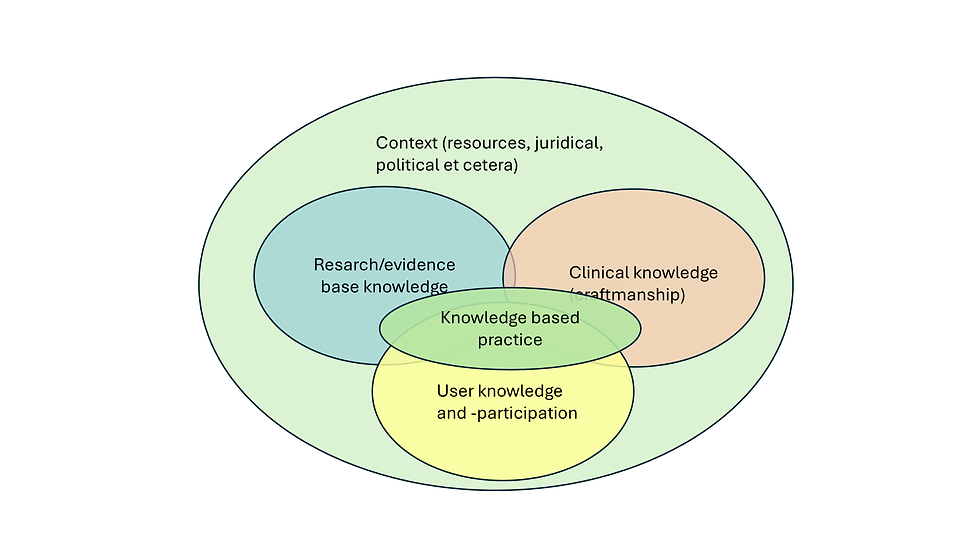
Several years ago, when I was working in the acute psychosis department, we had early psychosis intervention teams, and this approach left a deep impression on me. It created a supportive circle around the patient - a circle that included the patient themselves, their family members, sometimes a friend or colleague they trusted, and our professional team: a psychologist, psychotherapist, social worker, and psychiatrist. We all came together with one shared intention: to understand what mattered most to the patient that day. The patient would express their hopes or worries, and each of us would gently contribute our perspective on how we could help.
What made these meetings truly special was not just the clinical planning, but the emotional honesty that guided them. We spoke about how the patient was feeling, how their loved ones were coping, and even how we as professionals experienced the situation. This openness allowed everyone to feel recognised and valued. It created a shared emotional space where understanding grew naturally, and decisions felt less like directives and more like compassionate choices made together.
In such an atmosphere - inclusive, respectful, and sincere - polarisation begins to soften. When every voice is heard and every feeling acknowledged, the path toward meaningful and collaborative treatment becomes clearer. It is in this kind of environment that healing relationships can form, and truly constructive decisions can emerge.
Thank you for the conversation. □